
Stroll through Arlington National Cemetery and you’ll find roads named for presidents,
generals, admirals, and recipients of the nation’s highest military honors. Then you come to
Lewis Drive. At first, Meriwether Lewis may come to mind. However, you’d be mistaken, the
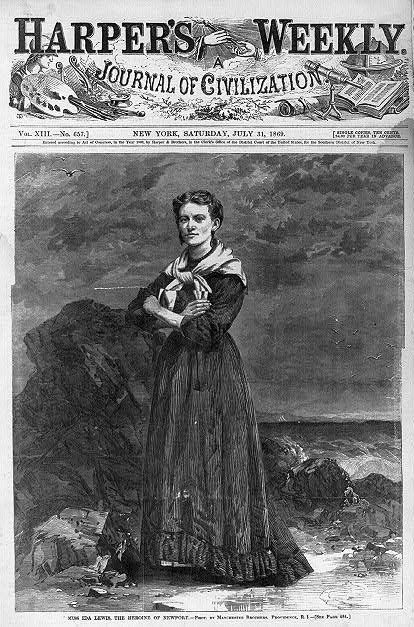
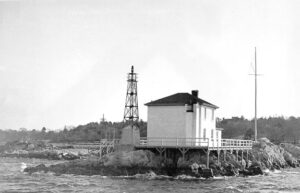
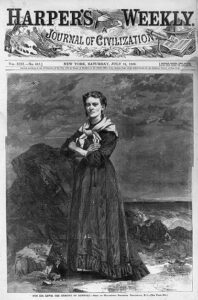
road is, in fact, named for Ida Lewis, the legendary keeper of Lime Rock Lighthouse in
Newport Harbor, whom contemporary newspapers referred to as the “bravest woman in
America.” Over more than five decades on Rhode Island’s coast, Lewis became one of the
best-known figures in the U.S. Lighthouse Service, repeatedly risking her own life to rescue
mariners from the unforgiving waters of Narragansett Bay and earning a reputation as one
of the greatest lifesavers in American maritime history.
Ida Lewis was born on February 25, 1842, in Newport, Rhode Island. When she was a
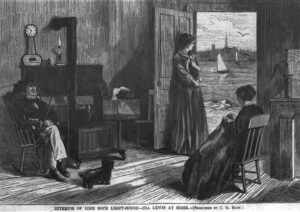
teenager, her father, Hosea Lewis, became keeper of Lime Rock Lighthouse in Newport
Harbor. Shortly after his appointment, he suffered a severe stroke that left him unable to
manage many of the lighthouse’s daily responsibilities. At just fifteen, Ida assumed much of
the station’s daily work. It was a responsibility she would carry for the rest of her life.
Operating Lime Rock Lighthouse demanded constant work. The lantern had to be fueled
and maintained, the reflectors cleaned, the station repaired, and supplies regularly
transported to the island. Because the lighthouse stood on a small island, nearly every
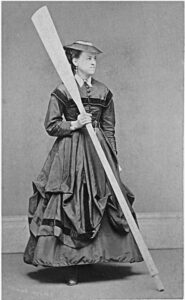
errand required a trip by boat. Ida rowed her younger siblings to school each day and made
frequent trips to Newport for provisions, becoming an experienced rower.
Lime Rock stood at the entrance to Newport Harbor, where merchant vessels, naval ships,
fishing boats, and ferries regularly passed within sight of the lighthouse. Before radio
communication and organized rescue services, lighthouse keepers were often the first to
notice a vessel in distress or someone struggling in the water. They were frequently the first
to respond, making seamanship and knowledge of the harbor as essential to the job as
maintaining the light.
The rescue that brought Ida national attention came on March 29, 1869. Two soldiers from
nearby Fort Adams had hired a 14-year-old local boy to ferry them across Newport Harbor
when a sudden snowstorm overturned their small boat. Despite the boy’s efforts, the
violent seas proved too much, and he was lost to the storm while the two soldiers managed
to cling to the overturned craft. From Lime Rock Lighthouse, Ida spotted the men struggling
in the icy water and immediately launched a rowboat with her mother. Battling fierce winds
and heavy seas, Ida reached the survivors, pulled the nearly frozen soldiers aboard, and
rowed them safely back to shore. Newspapers across the country carried the story,
transforming the quiet lighthouse keeper into a nationally recognized figure.
Newspapers celebrated her courage, and visitors traveled to Lime Rock Lighthouse hoping
to meet the woman they had read about. She received gifts, letters, and eventually formal
honors for her lifesaving efforts. As the women’s suffrage movement gained momentum,
advocates pointed to Lewis as an example of women’s courage, judgment, and ability to
serve in roles traditionally reserved for men.
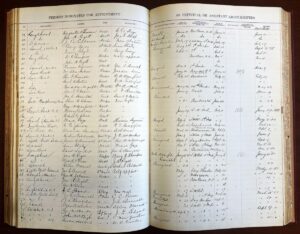
Following her mother’s death in 1879, Ida was officially appointed keeper of Lime Rock
Lighthouse. Appointed under her married name, Ida Wilson, she formally assumed a role
she had effectively performed for years. Lewis continued responding to emergencies
throughout her career, whether they involved overturned boats, sudden squalls, or
accidents in Newport Harbor. One notable rescue came in 1881 when Sarah E. Doyle
slipped into the water while attempting to board a steamer. Seeing the accident from Lime
Rock Lighthouse, Lewis immediately launched her rowboat, reached Doyle, and pulled her
safely to shore.
Later that year, Lewis became the first woman to receive the United States Gold Lifesaving
Medal, one of the nation’s highest civilian honors for acts of maritime rescue. By the end of
her career, she was officially credited with saving eighteen lives, though historians believe
the true number was likely higher because many rescues went unrecorded.
Although Ida Lewis became the most famous woman in the United States Lighthouse
Service, she was not alone. Across the country’s coasts and Great Lakes, dozens of women
served as lighthouse keepers, often stepping into the role after the death or illness of a
husband or father. Many maintained isolated stations, navigated dangerous waters, and,
like Lewis, carried out rescues that rarely received national attention. Their contributions
helped shape the history of the Lighthouse Service.
Lewis’s legacy did not end with her final watch at Lime Rock. The lighthouse was renamed
Ida Lewis Rock Lighthouse in her honor, and generations of Coast Guard personnel,
lighthouse historians, and mariners have continued to recognize her extraordinary service.
Her story has endured not because she sought recognition, but because she represented the
very best qualities of the United States Lighthouse Service: vigilance, seamanship, courage,
and an unwavering commitment to safeguarding those on the water.
Those qualities also explain why her name appears among the roads of Arlington National
Cemetery. Surrounded by avenues honoring presidents, admirals, generals, and recipients
of the nation’s highest military decorations, Lewis Drive commemorates a woman whose
service was measured not in battles fought, but in lives saved. For visitors who happen
upon Lewis Drive and pause to wonder which Lewis it honors, the answer is one of the
most accomplished lifesavers in American maritime history.
More than a century after her death, Ida Lewis remains a lasting reminder that quiet
devotion to duty can leave a legacy every bit as enduring as those of presidents, admirals,
generals, and explorers.
Wanda Verma, 2026